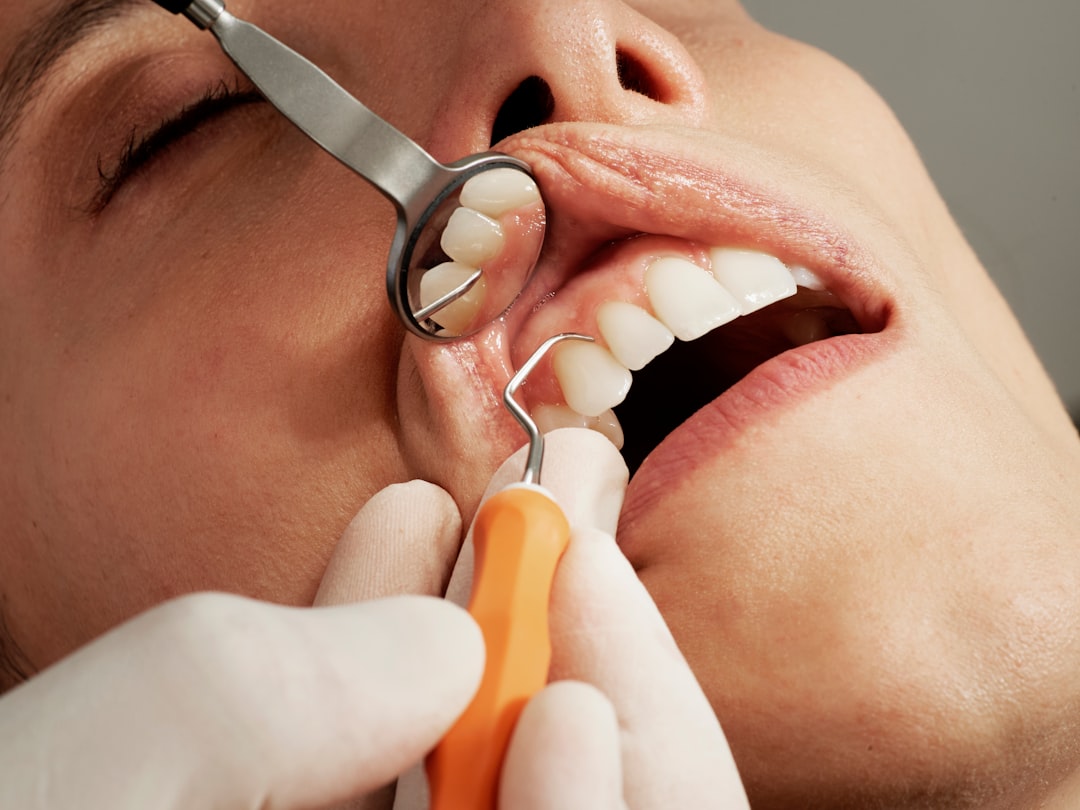

You left our chair an hour ago. Your lip feels like a water balloon, one side of your tongue is asleep, and you keep touching the numb spot without meaning to. When does this end? And how do you know if it is taking too long?
This post gives you the schedule. How long does tooth numbness last depends on which tooth we treated, how deep the shot was, and whether we topped it up during the appointment — but the ranges are tight, and they are predictable. Below is what to expect hour by hour, plus the exact points where a normal recovery turns into "please call us."
How Long Does Tooth Numbness Last on Average?
The short answer, before we walk through the hours:
- Upper teeth (front, side, or back): 1 to 3 hours of full numbness. Tingling can hang on for another hour after that.
- Lower front teeth: 1 to 3 hours, similar to the upper.
- Lower back teeth (molars and premolars): 2 to 5 hours. The lip and one side of the tongue often stay numb the longest.
- After a longer appointment with a top-up shot (a deep filling, a root canal, a crown prep): add up to 1 more hour at the top end of the range.
Almost every Berkeley patient we see is back to normal feeling by bedtime the same day. If yours is not, that is the point at which we want a phone call — not the next week.
Why the Upper and Lower Teeth Wake Up at Different Speeds
Upper teeth get what we call an infiltration — a small amount of anesthetic placed right above the tooth root. The drug soaks through the thin bone of the upper jaw and numbs the nerve endings of that one tooth. Small volume, short trip, faster wear-off.
Lower back teeth are stubborn. The bone is denser, so we cannot rely on soak-through. Instead we place the anesthetic next to the inferior alveolar nerve — the main trunk line that feeds every lower tooth on that side, plus the lip and half the tongue. That is why one shot numbs the whole lower quadrant, and why it takes longer to fade. Same drug, bigger target, longer duration. We cover the anatomy in more depth in our related post on what a numb tooth is actually telling you.
The Hour-by-Hour Timeline After Your Appointment
Here is what a normal recovery looks like, timed from the moment you walk out of the operatory.
Hour 0 to 1 — Peak numbness
Lip, tongue, and cheek all feel thick and asleep on the treated side. You can talk but the words feel mushy. Drinking water is fine if you tip your head; hot coffee is a bad idea. Chew on the opposite side or skip food entirely. This hour feels the strangest but is completely normal.
Hour 1 to 3 — Upper teeth start waking up
If we worked on an upper tooth, the numbness begins to lift somewhere in this window. You will feel a warm, tingly return-of-sensation in the lip first, then the gum around the tooth. By the end of hour 3 most upper-tooth patients feel almost normal, with maybe a slight rubbery sense in the lip.
Hour 3 to 5 — Lower molars catch up
Lower back teeth take the full window. You will notice pins and needles in the lip and along the side of the tongue as the feeling comes back. This is a good sign, not a bad one — it is the nerve waking up in order. The tooth itself may feel bruised or tender when you bite; that is the injection site, not the tooth.
Hour 5 to 8 — Sensation should be nearly normal
By hour 8, feeling in the lip, tongue, cheek, and gum should be back to 90–100%. You may still notice a soreness where the needle went in — that is normal for a day or two. If the tooth was treated with a filling and now feels a little sensitive to cold, that is also normal for a few days; we explain the longer version in why a tooth turns sensitive to cold weeks after treatment.
Hour 8 to 24 — Full return
By bedtime, and definitely by the next morning, you should be able to feel your lip pinch, your tongue touch the back of your teeth, and cold water on the treated tooth without anything feeling "off." Any residual numbness at this point is worth flagging.
How Long Does Tooth Numbness Last After Specific Procedures
The base ranges shift a little depending on what we did.
After a simple filling
Upper: 1–2 hours. Lower molar: 2–4 hours. If the filling was deep and near the nerve, the tooth itself may feel numb or dead-quiet even after the surrounding tissue wakes up. That is the tooth's own nerve settling down and usually clears in a few days. We cover the specific case in numb tooth after a filling: when it is normal and when to call us.
After a root canal
Similar to a filling in numb-time, sometimes an hour longer because we often top up the anesthetic during the procedure. The tooth itself will feel firm and pressure-only when you bite — no sharpness — for a day or two. If you are wondering whether the shot alone means the appointment will hurt, our post on what a root canal actually feels like walks through it minute by minute.
After a crown prep or a deep cleaning with anesthetic
Same numbers. Crown preps sometimes use a longer-acting anesthetic if we know the appointment will run over an hour, which can push the total numb time to 5–6 hours on a lower molar.
After a tooth extraction
2 to 5 hours for a lower back tooth, 1 to 3 for an upper. The gauze in your mouth for the first 30–45 minutes is unrelated to how long the numbness lasts; that is only for the bleeding.
Why Some People Stay Numb Longer Than Others
Two people can get the exact same shot and wake up 90 minutes apart. Here is why:
- Body size and metabolism. Smaller adults and children clear the drug faster. Larger adults hold it longer.
- Where the shot landed. If the anesthetic pooled right on the nerve trunk, it will last longer than if it soaked in from a millimeter away. This is normal variation, not a mistake.
- Whether epinephrine was in the mix. Most lidocaine cartridges include a tiny amount of epinephrine, which keeps the drug at the nerve longer. It is the reason a shot can last 3 hours instead of 45 minutes.
- How many carpules we used. A long appointment often means a top-up dose. More drug, more time to clear.
- Individual nerve anatomy. Some patients have a nerve branch that runs a little differently, and the anesthetic reaches it more slowly on the way in and slower on the way out.
The American Dental Association's patient guide to dental anesthesia covers the same ranges we do — 1 to 3 hours for upper, 2 to 5 for lower — and is a good outside reference if you want to read further.
When to Call Acorn Family Dental Care
Most of the time, waiting is the whole treatment plan. Here is when it is not.
Call the same day if:
- You are still fully numb 6 hours after an upper tooth or 8 hours after a lower one.
- The numbness is spreading instead of shrinking (moving up toward the eye or down the neck).
- You had a filling and the tooth itself feels dead-cold — no reaction to ice water — hours after the surrounding tissue woke up.
Call the next morning if:
- Any numbness, tingling, or "furry" feeling is still there when you wake up.
- A specific spot on the lip or tongue never quite came back.
- You feel a shooting or electric zap when you touch the numb area.
Call right away if:
- One side of the face droops or you have trouble smiling evenly.
- You cannot swallow normally or feel like your airway is off.
- Speech is slurred more than expected for a numb lip.
These last three are rare, but they overlap with symptoms that need to be sorted out quickly. If it is after hours and any of those show up, our post on what counts as a dental emergency in Berkeley walks through what to do next. For anything less urgent, our Berkeley office contact page has the direct line and our same-day slot policy.
What You Can Do While You Wait for Feeling to Come Back
- Chew on the opposite side for the rest of the day.
- Skip hot food and hot drinks for at least 2 hours after an upper tooth, 4 hours after a lower one.
- Do not test the numb spot by biting it, pinching it, or poking it with a fingernail. That is how patients end up with a bruised lip.
- If a child had the treatment, watch the lip — kids sometimes chew a numb lip without realizing, and the swelling shows up hours later.
- Room-temperature water and soft food (yogurt, applesauce, eggs) are all fine.
- Skip alcohol for the day; it slows the drug's clearance.
If the tooth we treated was near a nerve — a deep root canal, for example — some post-op tenderness is normal for a few days. That is separate from the anesthetic wearing off. Our full walk-through of root canal therapy at our Berkeley office covers what recovery looks like after the numbness is long gone.
What About Numbness That Shows Up Days or Weeks Later?
That is a different thing. A tooth that goes dead-quiet weeks after treatment — no reaction to hot, cold, or tapping — can mean the nerve inside the tooth has died and needs a root canal. It does not usually mean the anesthetic hurt anything; it means the tooth was already stressed and it caught up with itself. If that pattern sounds like yours, our post on whether a dead tooth is an emergency is the right next read.
Frequently Asked Questions
- How long does tooth numbness last after a normal dental visit? 1–3 hours for upper teeth, 2–5 hours for lower back teeth. Full feeling by bedtime the same day.
- Why does my lower jaw stay numb longer than the top? Lower back teeth need a deeper nerve block on a larger nerve trunk, so the drug lingers longer.
- Is it dangerous if I am still numb after 6 hours? Not dangerous, but worth a same-day call so we can document it.
- Can I eat while my tooth is still numb? Soft, room-temperature food on the other side of the mouth is fine. No hot drinks or hard food until feeling returns.
- How long is numb after a root canal versus a filling? About the same range; a root canal may run to the top end of the range because we top up the anesthetic.
- When should I call Acorn Family Dental Care? Same day past 6 hours upper or 8 hours lower; next morning if anything is still numb; right away for shooting pain, facial droop, or a dead-cold tooth.
The Bottom Line
A normal numb tooth wakes up on a schedule: upper teeth in 1–3 hours, lower molars in 2–5, everything back by bedtime. The exact hour depends on the tooth, the shot, and you — but the window is tight, and stepping outside it is our cue to check in. If you are past those hours and still feeling nothing, save this post's numbers and give our Berkeley office a call. We would rather look at a fine tooth than miss an early one.